

For more than a hundred years, people have argued about which system is better: communism, socialism, or capitalism. Each one promised a better world. Each one inspired millions. And each one, in its own way, ran into limits that are becoming impossible to ignore.
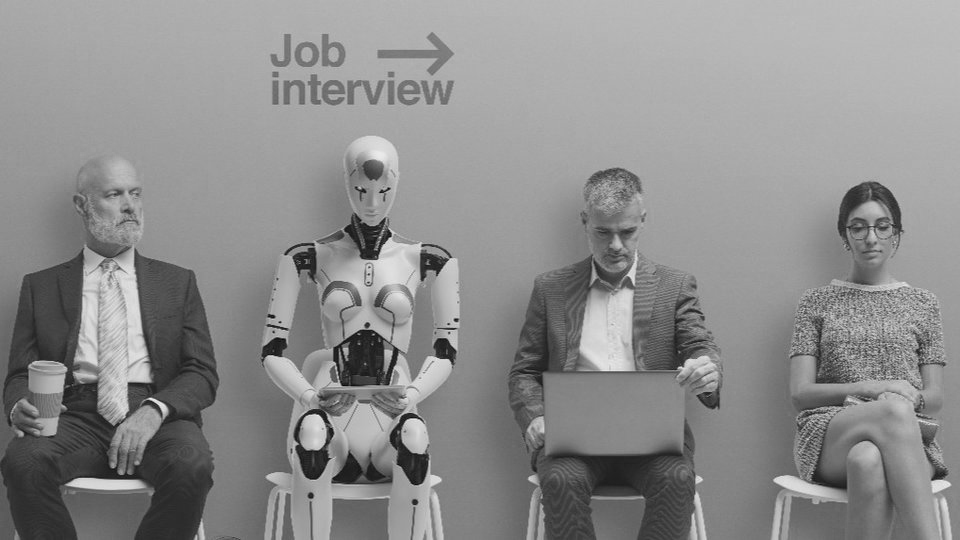
Today, something huge is happening: robots and AI are replacing human labor. Not in the future — right now. And that changes everything. If machines can do most jobs better, faster, and cheaper than humans, then the old systems built around human labor simply stop making sense.
This is where a new idea enters the picture: Humanism, a system designed for a world where machines work and humans live.
Hey, I’ve lived in countries across South America and visited others under both left‑leaning and right‑leaning governments, and I’ve seen how different their policies can be when your come back years later. I also visited many major European capitals before their recent political shifts. So believe me when I say that…
- Communism and Socialism Struggle in Real Life
Communism and socialism start with a beautiful dream: a fair society where everyone shares, everyone cooperates, and no one is left behind. But in practice, they often run into the same problem again and again: Humans aren’t perfectly selfless. People want recognition, freedom, choices, and rewards for effort.
When a system expects everyone to work hard “for the collective,” motivation drops fast. And when the government controls everything — jobs, resources, decisions — power becomes concentrated, and people lose trust.
It’s not about “bad leaders.” It’s about human nature. People need incentives, independence, and transparency. Without those things, the system slows down, becomes rigid, and eventually collapses under its own weight.
- Capitalism Is Also Reaching Its Limit
Capitalism is built on a simple rule: if you work, you earn. If you own capital — machines, companies, technology — you earn even more.
But here’s the problem: AI and robots are becoming the new capital.
If only a few companies or billionaires own the machines that do all the work, then wealth becomes even more concentrated than it already is. Workers lose bargaining power. Jobs disappear. Inequality grows. And the entire system becomes unstable.
Capitalism depends on human labor to function. But what happens when human labor is no longer needed?
- The Big Shift: Machines Work, Humans Live
For the first time in history, technology can replace almost every type of job: manual labor, office work, creative work, analysis, translation, design, even decision‑making.
This isn’t science fiction. It’s happening right now.
So the real question becomes: If machines can work, why should humans be forced to?
This is the starting point of Humanism.
- Humanism: A System Built for a Post‑Labor World
Humanism is simple to understand:
Let machines do the work. Let humans live.
Instead of fighting automation, Humanism uses it to free people from compulsory labor. The key idea canm be something like a Skill‑Cloning Subscription. Let’s say:
- You pay a membership to clone your professional skills into an AI or robot, matching the demand in the Humanist market formed by all AI- and robot-based companies offering this type of proxy work.
- The AI or robot gets a secured job in a private or public company that belongs to the system.
- You pay 20% of your income for maintenance of the AI or robot.
- That AI works for you — 24/7, at scale, with your style and expertise.
- You keep 80% of the income it generates.
- You stop working, but your income continues.
As you may see, the more you know, the more you earn — but you also have to invest more to clone yourself.
Your skills become your capital. Your AI or robot becomes your worker. You become free.
This is not welfare. This is not universal basic income. This is personalized passive income.
For students, imagine majoring in college while traveling around Europe, and your AI handles your first job for you. It would cost less than doing the job yourself, and your whole trip could basically pay for itself.
As long as there are enough Humanist companies demanding and securing these proxy jobs, every social group will have access to them. And it’s the responsibility of these companies to ensure that even those living on the margins of society are included in the equation.
- What Humans Do When Machines Work
If machines take over the jobs, humans don’t become useless — they become free.
Free to:
- create
- learn
- travel
- raise families
- explore
- build communities
- rest
- innovate
Humans become designers of meaning, not producers of output.
- The Transition Is Gradual, Not Violent
Humanism doesn’t require a revolution. It unfolds step by step:
- People start subscribing to clone their skills.
- Their AI agents begin generating income.
- Humans reduce working hours.
- Society slowly shifts away from the job = identity model.
- Work becomes optional. Income becomes automated.
It’s not chaos. It’s an upgrade.
- The Goal: A Civilization Without Economic Fear
Humanism imagines a world where:
- no one fears unemployment
- no one is trapped in repetitive labor
- no one’s value depends on productivity
- technology benefits everyone
- wealth is distributed through personal automation
This isn’t utopia. It’s the logical next step after capitalism and communism.
Hey, this is my first post about it, and I’m sure there are lots of points we have to check to make sure this model is possible. But at least it’s a light at the end of the tunnel.
Conclusion: Communism tried to reshape society through equality. Capitalism tried to reshape society through markets. Both depended on human labor. But now, machines are taking over, so let machines work and let humans live.
Leave a Reply