

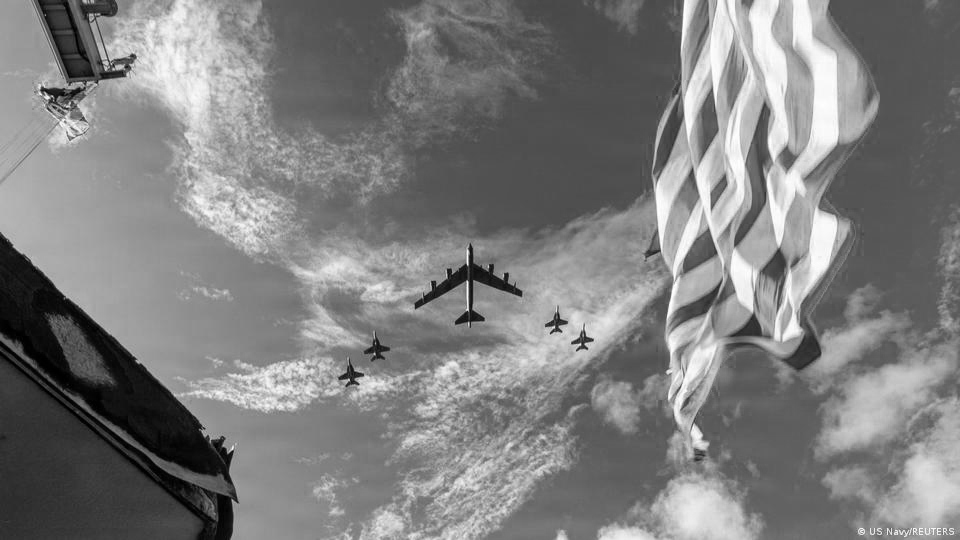
Every society has a moment it can’t forget — the moment when the people who were supposed to protect you suddenly turn against you.
This can happen in many ways:
- a government takes over by force,
- a revolution becomes another dictatorship,
- a promise of justice turns into fear,
- an idea becomes a strict, unquestionable rule.
When this happens, people face a harsh truth:
- the government becomes the danger,
- the institutions feel like a trap,
- the law feels like something used against you.
That’s when people start wishing for a Guardian — someone or something that can protect them from the very power that was supposed to help them.
A Guardian could be:
- a country,
- a group of countries,
- an international organization,
- or, in stories, someone like Superman.
Superman: the protector who saves by fighting
Superman represents a tough idea: sometimes stopping a monster causes destruction too.
The city gets destroyed so it can survive
In modern movies, the final fight never happens in an empty place. It happens right in the city:
- buildings fall,
- glass breaks everywhere,
- bridges collapse,
- streets crack open.
You see two disasters at once:
- the villain trying to destroy everything,
- and the hero fighting him, causing damage too.
But we still call him a hero because:
- if he doesn’t fight, everyone dies,
- if he does fight, the city gets hurt — but survives.
It’s painful, but total destruction would be worse.
So if Superman could fight the alien monster on its own planet before it gets to Earth, that would be better for us, right? In the same way, when the U.S. strikes Venezuela or Iran, the idea is to keep the conflict on the enemy’s ground and avoid unnecessary destruction at home. But Democrats and socialists still protest and bitch about it.
The hero on trial
After the fight, people start asking:
- “Who gave him the right to do this?”
- “Who pays for the damage?”
- “Who controls someone this powerful?”
- “What if he turns against us one day?”
Superman becomes suspicious in people’s eyes. That’s the Guardian’s curse: he protects you, but he also scares you.
The Guardian through history
The idea of a Guardian isn’t new. Empires used it to justify their power.
- Ancient empires
Rome, China, Persia — they all promised peace, but also controlled people harshly. The Guardian always had two sides: protector and ruler.
- The British Empire
They said they were bringing order, fighting pirates, signing treaties — but they also took over huge parts of the world.
- World War I
In 1914, a political assassination triggered a chain reaction. Countries declared war because no one strong enough stepped in to stop the conflict. When the U.S. joined, it presented itself as a kind of world Guardian.
- World War II
Fascism rose, genocide spread, and the world needed a powerful group of countries to stop it. Sometimes the Guardian isn’t pretty — but necessary.
The Cold War
After 1945, two superpowers claimed to protect the world:
- the U.S. said it defended freedom,
- the USSR said it defended the oppressed.
Two Guardians. No innocence.
After the Cold War
The USSR collapsed. The U.S. became stronger. The UN tried to keep peace. And other countries wanted influence too.
Everyone decided to be the Guardian, but no one fully earned trust.
Today
Countries like Iran, Ukraine, Venezuela, Colombia, and Cuba raise the same old question: Who protects people when their own government doesn’t?
Every action — sanctions, pressure, diplomacy — can look like:
- protection or manipulation,
- help or strategy,
- a Guardian or an opportunist.
The confusion never goes away.
The U.S. as a Global Guardian
Some people see the U.S. as defending rights. Others see it as expanding influence. The truth is usually mixed. Guardians are never perfect.
I’ve lived in Bolivia and Colombia, and I’ve spent time in Venezuela, Chile, Argentina, and several countries in Europe like Germany, Spain, Italy, the UK, and Greece. Seeing all these places helped me notice how different governments make different choices — and how those choices affect everyday life.
In some countries, I saw things fall apart from the inside. I saw how certain laws, especially around immigration and asylum, can create problems when they’re not managed well. After watching all this up close, I realized something important:
The world keeps looking for a Guardian — a kind of “Sheriff” — someone or something strong enough to protect people from oppression, corruption, and the slow destruction of their culture while the people in power get richer. A lot of people in the countries I mentioned told me that, and if you check social media, a lot more support Donald Trump and the U.S.
That’s the idea I’m trying to explain: when things get bad, people start wishing for someone who can step in and stop the damage before it’s too late. And the UN and the politicians who say that we need diplomacy over weapons are just delusional.
Imagine a woman who’s been hurt by her husband for years. The neighbors keep saying things like, “Someone should help her,” or “She should call the police,” but nobody actually does anything.
Time passes, and finally the guy who lives in the penthouse steps in. He confronts the abusive husband and forces him to leave the building. Some neighbors complain about how he handled it, but others say, “Well, at least someone finally helped.”
Now imagine that after saving her, the hero tells the woman, “Hey, I helped you — could you give me your car in return?” Of course she’d give it to him. She was in real danger, and he protected her when no one else did.
That’s the idea behind the metaphor: when someone powerful steps in to help a country escape a bad situation, that country might offer something in return — like resources — because they want safety and a better future. And yeah, the UN, NATO, the European Union, are basically just watching from the sidelines.
So the penthouse neighbor, Superman, and Donald Trump know there’s no clean choice.
The Global Guardian faces the same trap:
- act, and people fear you,
- don’t act, and people blame you,
- pressure others, and you look controlling,
- step back, and you look weak.
- Ask something in return, and they call you king.
There’s no way to win completely.
Final idea
The Guardian exists because the world still doesn’t have strong enough systems to protect people from abusive rulers.
As long as some countries silence their people or collapse into crisis, humanity will keep wishing for a Guardian — not because it’s perfect, but because sometimes it feels like the only option left, and the polls and election results keep proving who’s on the right side.
Leave a Reply