

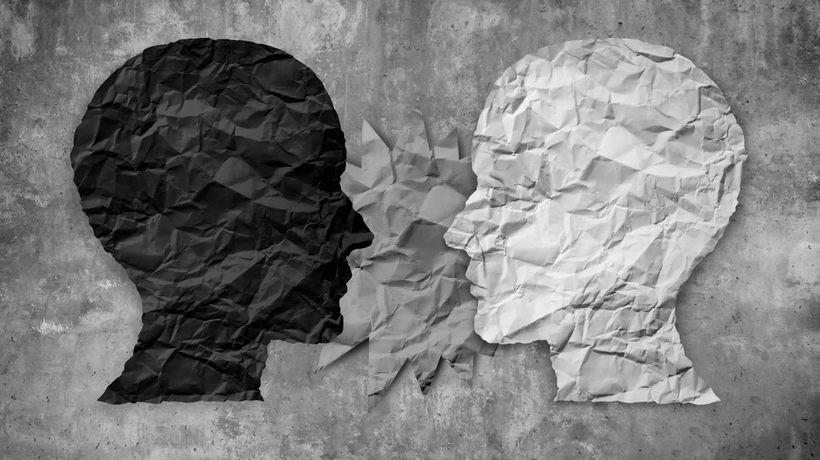
Introduction: Big Ideas vs. Real‑World Limits
Communism and socialism are some of the most debated political ideas ever.
For many people, they represent the dream of a fair, equal, and caring society. For others, they seem like systems that run into serious problems once they’re actually put into practice.
This article isn’t here to praise or attack these ideas. It’s here to look at something more basic: why many experts think that certain versions of socialism and communism — especially the ones where the government controls almost everything — clash with how humans actually behave and how modern societies work.
This doesn’t mean:
- all socialist ideas fail, or
- capitalism is perfect.
It just means that when you try to build a totally planned, totally equal society, some deep tensions show up — not because of “bad leaders,” but because of human nature.
A teacher once told me: “If humans have no guidance, they go dark. Education is what keeps us from slipping.”
The Socialist Ideal: A Very Hopeful View of Humanity
Socialism starts with a hopeful idea: that people can work together for the good of everyone, not just themselves.
In its most ideal form, socialism imagines a world where:
- private ownership mostly disappears,
- wealth is shared based on need,
- work is about helping, not surviving,
- competition becomes cooperation,
- social classes fade away,
- and the community or State guarantees everyone a good life.
This vision depends on a very optimistic view of human nature — the belief that people will stay cooperative even without extra rewards.
But many researchers argue that this view doesn’t match what we see in real life across different cultures and time periods.
III. Human Nature: What Psychology and Evolution Suggest
Talking about “human nature” is tricky, but some patterns show up again and again.
Humans are a mix of generous and selfish
People can be incredibly kind and cooperative. But they also tend to:
- look out for themselves,
- protect their own group,
- avoid effort when it doesn’t pay off,
- compete for status and resources.
We’re not purely good or bad — we’re both. So any system that expects people to be selfless all the time is taking a big risk.
People favor their own group
Most people feel closest to:
- family,
- friends,
- community,
- culture,
- nation.
Huge, abstract groups like “the working class” or “humanity” are harder to feel connected to.
People want recognition
Across the world, people want:
- status,
- achievement,
- influence,
- independence.
Systems that erase differences or rewards often create frustration.
People distrust concentrated power
History shows that when one group controls everything, people get suspicious — especially if there’s no way to hold that group accountable.
When the State Controls Everything
In centralized socialist or communist systems, the State manages almost all property and decisions. That usually means:
- one ruling party,
- a huge bureaucracy,
- a government with massive control.
Critics point out problems like:
- low transparency (hard to check what’s really happening),
- weak accountability (no competition = no pressure to improve),
- slow bureaucracy,
- risk of authoritarianism (when the State controls the economy, media, and education, it’s easy for power to go too far).
Not every socialist system becomes authoritarian — but concentrated power makes it more likely.
Motivation and Productivity
Research shows people respond to rewards — money, recognition, freedom, opportunities.
When a system:
- doesn’t reward effort,
- doesn’t recognize merit,
- doesn’t encourage innovation, motivation drops.
Not because people are lazy — but because they adjust to the system. If working harder changes nothing, most people stop trying.
Central Planning vs. Real‑World Complexity
Modern economies are super complex. Millions of decisions happen every day.
Central planning struggles because:
- no one can know everything,
- plans get outdated fast,
- one mistake can break a whole sector,
- without price signals, it’s hard to know what people actually need.
Planning isn’t impossible — just extremely hard to sustain.
VII. History: Patterns That Keep Repeating
In the 20th century, many countries tried centralized socialist or communist systems. Despite different situations, similar problems kept showing up:
- shortages,
- black markets,
- huge bureaucracies,
- limited freedom to disagree,
- talented people leaving,
- slow innovation.
External problems mattered too, but the internal issues were consistent.
VIII. Equality vs. Freedom
Socialist systems focus on equality. Critics argue that enforcing equality can conflict with freedoms like:
- choosing your job,
- starting a business,
- speaking freely,
- forming independent groups.
It’s not a simple “one or the other,” but the tension is real.
Failure or Just Difficulty?
Do these problems mean socialism or communism can never work? Not necessarily.
But they do suggest that:
- human nature sets limits,
- centralized power is risky,
- motivation matters,
- and no system can rely on everyone being selfless all the time.
Conclusion: Human Nature Sets Boundaries
This article isn’t trying to kill one ideology or praise another. It’s pointing out something simple:
Any political system that tries to reshape society from scratch has to deal with human nature — the good and the bad.
People need:
- incentives,
- recognition,
- freedom,
- working institutions,
- and protection from concentrated power.
Ignoring these realities eventually causes problems — no matter the ideology.
Leave a Reply