

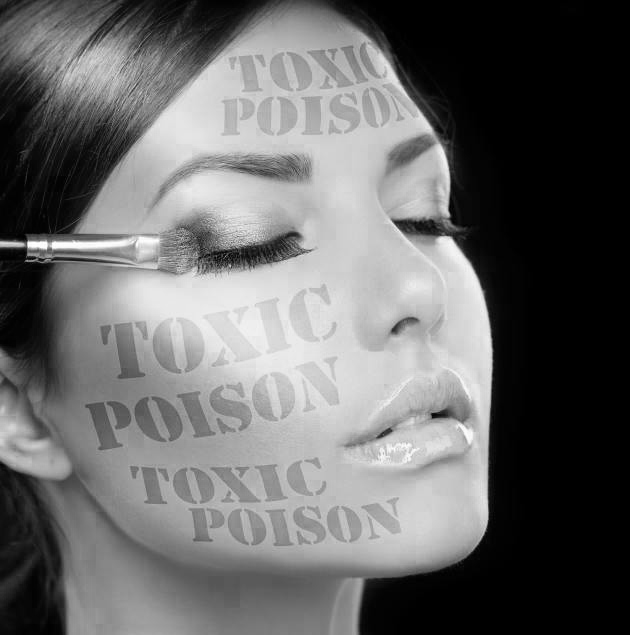
THE COSMETIC MIND — How the Beauty Industry Became the Silent Architect of Women’s Anxiety
There’s a quiet revolution happening in bathrooms, bedrooms, and vanity mirrors across the world — and it’s not glamorous. It’s chemical. It’s psychological. It’s invisible. And it’s happening every morning, every night, every time a woman opens a bottle, twists a cap, sprays a mist, or rubs a cream into her skin.
We talk about the beauty industry as if it were harmless glitter — a world of colors, fragrances, and self‑expression. But behind the pastel packaging and the influencer smiles lies a darker truth: modern beauty is synthetic, and the human mind was never designed to absorb this much artificiality.
For decades, women have been told that beauty is empowerment. But empowerment has a price — and the receipt is written in ingredients no one can pronounce.
The average woman applies dozens of products before leaving the house. Serums. Foundations. Primers. Concealers. Powders. Sprays. Hair dyes. Straighteners. Relaxers. Conditioners. Fragrances. Lotions. Sunscreens. Lipsticks.
A chemical symphony layered on the skin, absorbed into the bloodstream, inhaled through the lungs, sitting on the scalp for hours. And the industry calls it “self‑care.”
But here’s the uncomfortable question no one wants to ask:
What happens to the mind when the body is constantly marinating in artificial substances?
We know the body reacts to chemicals. But the mind? The mind is the final frontier — and the beauty industry has been trespassing for decades.
Women today report higher levels of anxiety, mood swings, irritability, emotional volatility, and chronic stress than any generation before them. And society blames everything except the obvious: the daily chemical load that modern beauty routines demand.
We pretend makeup is harmless because it’s socially acceptable. We pretend hair treatments are safe because they’re sold in stores. We pretend fragrances are innocent because they smell like flowers.
But flowers don’t smell like that. Nature doesn’t smell like that. Nothing in nature is neon pink, metallic purple, or glitter‑infused.
The beauty industry has created an artificial ecosystem — a synthetic world women are expected to live in, breathe in, and absorb. And the psychological consequences are treated as “mysteries.”
Women are told their anxiety is hormonal. Their mood swings are emotional. Their irritability is personal. Their exhaustion is psychological.
But what if part of it is environmental? What if part of it is chemical? What if the mind is reacting to the constant bombardment of substances it was never designed to process?
We know certain ingredients can disrupt hormones. We know others can affect the nervous system.
We know some can influence mood, sleep, and stress responses.
But the industry’s answer is always the same: “Don’t worry. It’s safe.”
Safe according to whom? Safe according to what? Safe for the skin — or safe for the psyche?
No one asks that last question. Because the moment you ask it, the entire beauty empire starts to tremble.
Imagine a world where women stop buying products not because they’re expensive, but because they realize the psychological cost. Imagine a world where the beauty industry is forced to admit that “self‑care” might be self‑harm in slow motion. Imagine a world where women demand transparency not about wrinkles, but about mental health.
The industry would collapse overnight.
And here’s the most provocative part:
The beauty industry doesn’t just sell products — it sells insecurity. And insecurity is the perfect business model because it regenerates itself.
A woman feels anxious → she buys products to feel better → the products contribute to more anxiety → she buys more products.
It’s a psychological loop disguised as empowerment.
And the chemicals? They’re the silent partners in the business model.
The more artificial the beauty standard becomes, the more artificial the products become. The more artificial the products become, the more artificial the emotional landscape becomes.
Women are not “crazy.” They’re chemically overstimulated. They’re psychologically overloaded. They’re emotionally exhausted by an industry that profits from their imbalance.
And society calls it “normal.” But nothing about this is normal. Nothing about this is natural. Nothing about this is harmless.
The beauty industry has become the quiet architect of modern female anxiety and extremism — not because it wants to destroy women, but because it wants to keep them buying.
And the most dangerous part?
It’s working.
But you don’t need to memorize chemistry textbooks. You just need to stop assuming the system is protecting you. Because right now, the only real regulation is the one enforced with money. There are organizations out there (you know which ones) that approve products and say certain chemicals are safe… but then years later we find out they weren’t.
Honestly, here’s my take: I think it’d be great if more women felt comfortable skipping makeup and just being themselves. A lot of guys actually like the natural look anyway. And it’s kind of wild to use five products a day when you’ve got forty sitting on your shelf. A healthier, more natural vibe can help you feel confident in your own skin — and attract someone who likes you for who you are, inside and out. Yeah, I get it — I’m a guy, so what do I really know about women and makeup, right? But here’s what I do notice: a lot of girls seem more stressed, tired, and unhappy every year while trying to figure everything out. And it makes me wonder… why work out, eat healthy, care about the planet, animals, and all that, but then put tons of chemicals on your skin every day? It just feels like the opposite of what you’re trying to do.
Leave a Reply